verifiedProfessional Chauffeurs · Licensed & Insured
Guides

How Stay-in-Vehicle Customs Clearance Works

The stay-in-vehicle difference: how in-car immigration clearance works, what you do at each checkpoint, and why it beats walking through on foot.

· 4 min read

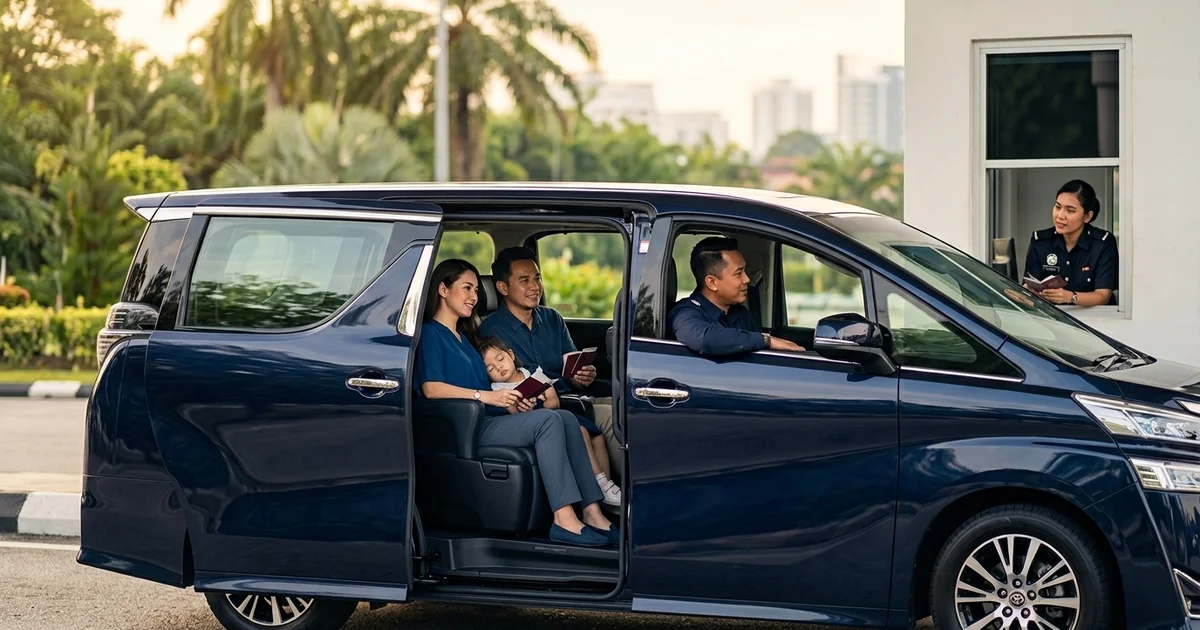
Passengers seated in the vehicle during immigration clearance

From what we observe daily at the borders, the most exhausting part of a cross-border trip is rarely the drive itself. It is the repetitive cycle of loading, unloading, and dragging luggage through crowded halls.

We handle this reality constantly for international tourists and families.

Enjoying a smooth stay in car immigration clearance Singapore Malaysia journey is exactly why most people who book our cross-border travel service book it again. Let us look at the actual mechanics of in-vehicle clearance, the specific digital preparations required for 2026, and practical ways to respond to checkpoint congestion.

The Difference in One Sentence

On a public bus you get out at the checkpoint, carry your luggage through the immigration hall, clear the counter, and re-board on the other side. In a private car you stay in your seat and hand your passport through the window or simply scan a QR code.

That single distinction completely transforms the journey.

Diagram of passport checks at the vehicle window

How In-Vehicle Clearance Works

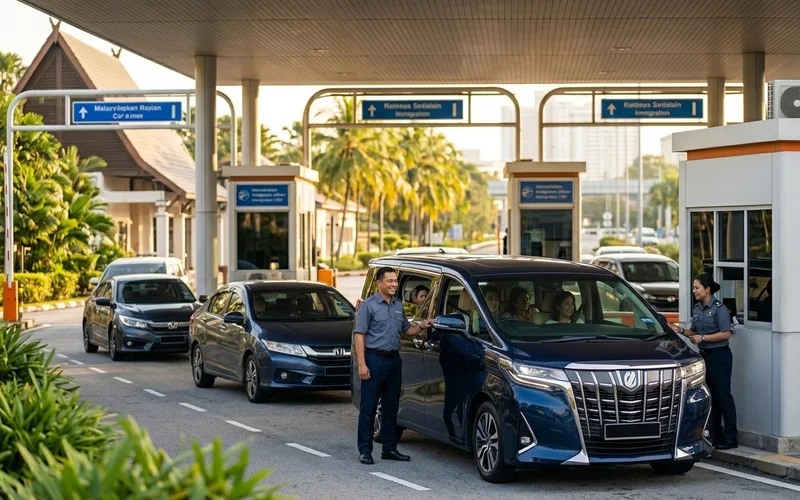
Border checkpoints separate traffic into distinct lanes for cars, buses, motorcycles, and freight. Each lane type operates with its own processing arrangement, and the car lane is explicitly designed for occupants to be processed while safely seated inside the vehicle. The seated process flows smoothly through these standard stages:

  1. Approach the Booth: Your chauffeur pulls up directly to the immigration booth.
  2. Submit Documents: Everyone in the vehicle hands over their passport, or the driver scans a pre-generated group QR code.
  3. Brief Verification: The officer processes the documents, sometimes asks a routine question about the purpose of your visit, and returns them.
  4. Proceed Forward: The barrier then lifts and you continue on your way.

On a quiet weekday morning, this entire interaction takes only a few minutes. At peak times, the queue to reach the booth becomes the slow part, not the processing itself.

You then cross the physical bridge linking the two countries and repeat a similar process for the other nation.

The Role of QR Codes and Digital Apps

Recent technological upgrades have modernised this seated clearance process. At the Singapore checkpoints, the MyICA mobile app allows eligible travellers in a single car to use a consolidated group QR code, which speeds up the booth interaction considerably. Malaysia is rolling out similar digital clearance systems on its side of the checkpoints, including at Bangunan Sultan Iskandar. Rules on who qualifies change from time to time, so we confirm the latest setup for your group before you travel. You simply stay in the air-conditioned cabin while the driver handles the interaction on your behalf.

What You Actually Do

Very little is required of you, which is the exact point of the service. You can optimise the brief interaction by following a few clear steps.

  • Have passports accessible. Do not store them in a checked bag in the boot. Keep them in a small bag beside you or in a jacket pocket, since some visitors still need to present a physical passport even when a QR option is available.
  • Generate your QR codes early. Download the MyICA app and create your group profile before you even leave your hotel. Trying to download the app at the checkpoint border often fails due to weak mobile signals.
  • Have arrival card confirmations ready. Foreign visitors entering Malaysia must submit the Malaysia Digital Arrival Card (MDAC) within three days prior to arrival. A saved PDF or screenshot of the MDAC confirmation on your phone is highly recommended, as immigration officers frequently request to see it.
  • Stay seated unless asked otherwise. Do not open car doors or step out to stretch your legs at the active booth. Security protocols require all occupants to remain inside the vehicle.
  • Let the driver talk. Your chauffeur handles the primary interaction and knows the exact protocol for the specific lane. Answer directly if an immigration officer speaks to you, but otherwise, there is nothing for you to manage.

Orderly car lanes at the border checkpoint complex

When You Might Need to Step Out

People frequently ask, do I get out of the car at the border? Occasionally, an officer will require a passenger to temporarily leave the vehicle for a secondary check. This is standard border control procedure and typically happens for two distinct reasons:

  • Biometric Verification: An officer might ask someone to step out for a brief biometric fingerprint scan.
  • Luggage Inspection: They may request that a specific bag in the boot be opened for visual inspection.

If this happens, simply follow the instruction calmly. The verification is normally over in just a few minutes.

Our drivers stay with the vehicle throughout the entire inspection. You are never left alone to manage the luggage or the paperwork.

For larger groups, note that standard private cars and MPVs are processed in the regular car lanes. Larger commercial vehicles are sometimes directed to a different lane depending on the checkpoint, which is one reason we match the vehicle to your group size before booking.

Why It Matters More Than It Sounds

The physical demand of a standard border crossing is often underestimated. For specific groups of travellers, avoiding the main immigration hall is a massive upgrade in comfort and safety.

AspectPublic bus or Walk-inPrivate car
Luggage handlingYou carry it through two buildingsStays securely in the car boot
Group cohesionEveryone must reassemble at the coachNobody leaves the vehicle
Young childrenManaged through a crowded queue on footStay safely seated
Reduced mobilityTwo long walks through a busy hallNo walking required
Weather exposureExposed sections at multiple pointsInside air-conditioned cabin throughout

The traveller this helps most

Anyone travelling with young children, elderly relatives, mobility needs, or more than two heavy suitcases. For those specific groups, the difference between the two border experiences is profound.

It Does Not Speed Up the Queue

It is worth being completely honest about the limitations of private car customs clearance Singapore. Staying in the vehicle removes the walking and the heavy luggage handling, but it does not exempt you from general checkpoint congestion.

If the car lanes are heavily backed up on a Friday evening, you will wait just like everyone else. The distinct advantage is that you wait seated in a quiet, air-conditioned cabin rather than standing shoulder-to-shoulder in a noisy public hall.

Making the Right Route Choice

We can actively influence the journey time by deciding which crossing to use and adjusting when you travel. The Woodlands Causeway vs Tuas Second Link guide covers how your chauffeur makes that specific routing call on the day of travel.

That strategic choice is usually worth more than any other timing decision on your entire trip. Reach out to our team today to reserve your vehicle and secure a stress-free stay in car immigration clearance Singapore Malaysia transit.

Common Questions

Do I have to get out of the car at the border? expand_more
In most cases you stay in the vehicle for clearance. Occasionally an officer will ask a passenger to step out briefly, which is a normal part of border control and does not indicate a problem.
What do I do at each checkpoint? expand_more
Have your passport and completed arrival cards ready, hand them through the window when asked, and stay seated. Your chauffeur handles the lane, the routing, and the interaction with the officer.
Is staying in the car really more comfortable? expand_more
Yes, particularly with luggage. Your bags stay in the boot, you avoid the pedestrian queues, and there is no risk of losing anyone in the group between the hall and the vehicle.

Learn more about Cross-Border Travel

When you are ready to book, we will quote a fixed all-inclusive fare covering fuel, tolls, and reasonable waiting time.

Chat with us