
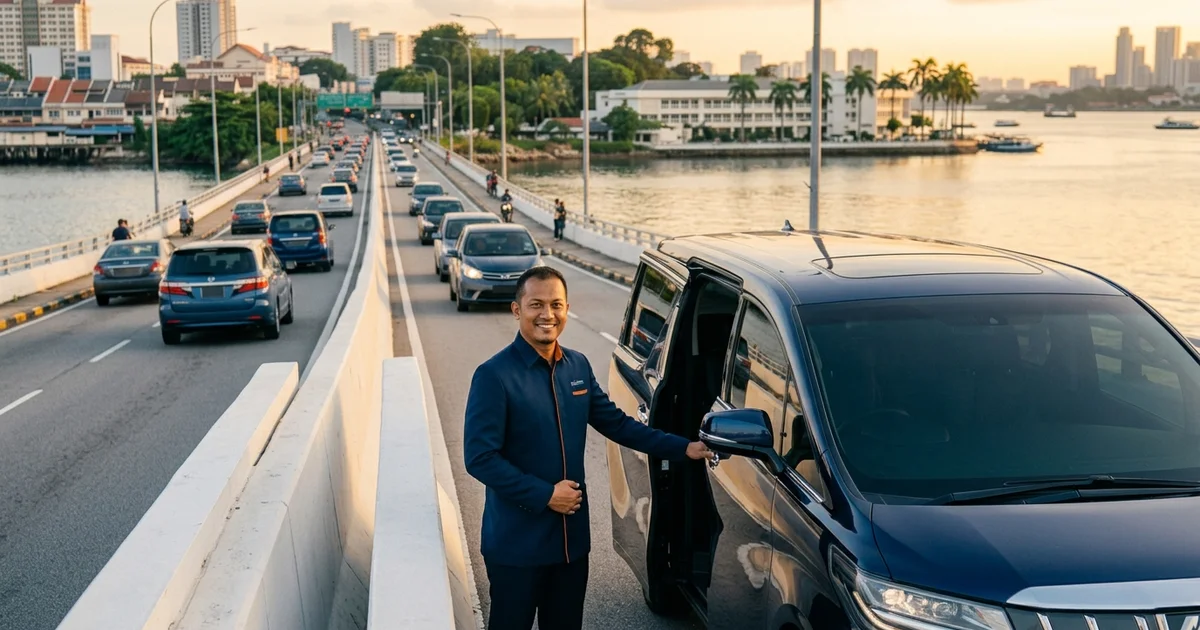
In short: the Woodlands Causeway (via the Sultan Iskandar Building in Johor Bahru) is shorter and better for central and eastern Singapore but far busier; the Tuas Second Link adds road distance but is quieter and better for the west, including Jurong and NTU. Your chauffeur picks from live traffic unless you state a preference.
Two Roads Into Singapore
You know how unpredictable the Malaysia-Singapore border can feel on a busy morning. It is one of the busiest land crossings in the world, so understanding the choice between the woodlands causeway vs tuas second link is a genuinely useful decision for the trip.
Our cross-border travel chauffeurs manage these exact routes every day for international tourists and large families. These professional drivers constantly monitor live traffic cameras to avoid the worst jams.
We have seen how a simple timing adjustment saves hours of waiting.
Let’s look at how the two routes differ, what the QR clearance apps actually change, and how to pick the right route for your schedule.
Woodlands Causeway vs Tuas Second Link: Side by Side
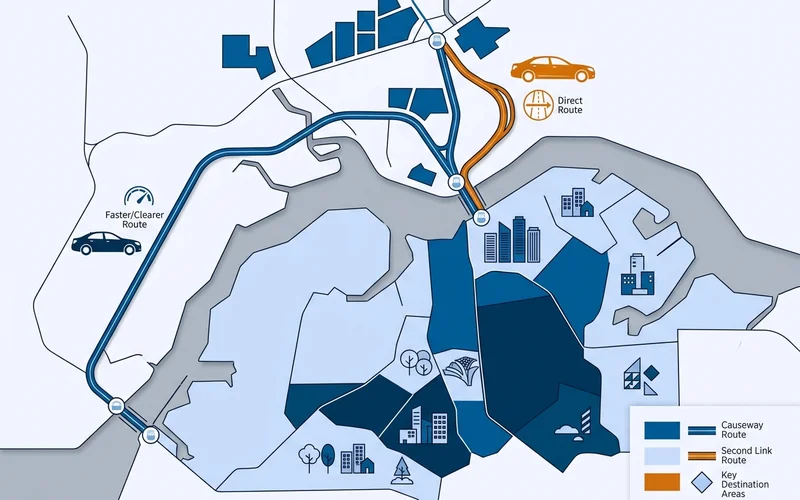
Comparing the two routes reveals distinct differences in traffic volume, travel costs, and strategic advantages. The Woodlands Causeway handles the bulk of the crowd, while the Tuas Second Link offers a wider, quieter option at a slightly higher toll price.
A quick glance at the core differences helps map out the reality of both checkpoints. The Causeway is the older, busier link, while Tuas carries noticeably less traffic, making it a reliable escape valve during heavy surges.
| Feature | Woodlands Causeway | Tuas Second Link |
|---|---|---|
| Malaysian side | Sultan Iskandar Building, Johor Bahru | Sultan Abu Bakar Complex, Gelang Patah |
| Singapore side | Woodlands Checkpoint | Tuas Checkpoint |
| Traffic volume | The busier of the two crossings | Noticeably quieter |
| Typical congestion | High, especially at peak commuter times | Moderate, with a sharp morning inbound peak |
| Best for destinations | Central, north and east Singapore | West Singapore, Jurong, Tuas |
| Toll costs | Standard crossing tolls apply both ways | Tolls apply both ways, typically a little higher than the Causeway |
| Approach distance | Shorter | Longer on both sides |
| Digital clearance | QR code clearance supported for eligible travellers | QR code clearance supported for eligible travellers |
Our team always factors these baseline differences into your itinerary. The Causeway might cost less, but Tuas often buys you back an hour of precious holiday time during Friday evening surges.
The final choice depends entirely on your specific drop-off point and the live camera feeds.
Which One Suits Your Destination
Selecting which border crossing to singapore you should use depends entirely on the location of your hotel or final stop. The Woodlands Causeway provides a direct line to central districts, whereas the Tuas Second Link bypasses city traffic for western locations.
The Central and East Route
The Causeway is the natural choice for reaching central Singapore, Orchard Road, Marina Bay, and Changi Airport. It feeds directly into the northern expressways that run down through the island in the direction of the centre. This direct route gets you into the heart of the city quickly, provided the border is clear. Our drivers prefer this path for mid-day arrivals when traffic is light. Off-peak hours make the Causeway highly efficient.
The Western Industrial and Theme Park Route
The Second Link is perfect for Jurong, Tuas, the western industrial areas, and Nanyang Technological University (NTU). It puts you on the west side without forcing you to cross the entire island. This route also works beautifully if your trip starts from Malaysian family attractions like Legoland in Iskandar Puteri. Families save considerable time by avoiding the busy Johor Bahru city streets altogether. We often route large groups this way to ensure a smoother, quieter ride.
When Traffic Overrides Geography
Somewhere in between these clear-cut zones, live traffic dictates the winner. A twenty-minute queue difference at the checkpoint easily outweighs a ten-minute difference in driving distance. This is where live monitoring tools like OneMotoring become essential for real-time decisions. The route that looks best on a map can sometimes leave you stuck in a sudden bottleneck. Our logistics team watches these trends to pivot your journey before you even reach the queue.

Timing Matters More Than Route
The time of day you travel impacts your journey far more than the physical bridge you choose. Crossing the border at 10am on a Tuesday feels completely different than battling the Friday evening rush.
The difference between a 30-minute breeze and a three-hour wait comes down to careful scheduling. Understanding the daily rhythm of the border is your best defence against delays. We highly recommend planning your itinerary around these known traffic surges. Avoid the commuter waves if your schedule allows any flexibility.
Optimal Crossing Windows
Finding the best time to cross johor singapore borders requires looking at the midday lulls. The clearest windows are generally mid-morning to early afternoon on weekdays, once the commuter rush has cleared and before the evening surge builds. These pockets see a noticeable drop in commercial buses and daily commuter cars. Travelling during these off-peak hours also lets you take advantage of QR code clearance where you are eligible, which speeds up the passport process further when lines are short. Our clients consistently praise how fast these midday transfers feel.
Peak Periods to Avoid
Certain times of the week guarantee heavy congestion at both checkpoints.
- Weekday commuter hours: Southbound mornings (6am to 9am) and northbound evenings are packed with daily workers.
- Friday evenings: Outbound traffic from Singapore builds aggressively from 5pm and peaks between 6pm and 8pm.
- Weekend leisure waves: Saturday mornings see a huge surge heading into Malaysia, while Sunday evenings bring everyone back.
- Public and school holidays: Long weekends trigger record-breaking queues, sometimes adding over three hours to the wait.
The single best timing decision
Leave Kuala Lumpur early. A 7am departure reaches Johor well before the evening pattern forms, and gives your chauffeur room to switch crossings if one backs up.
Planning around these known bottlenecks is the easiest way to guarantee a great trip. Getting you to your destination without unnecessary stress remains the top priority for every driver.
How Your Chauffeur Decides
Our driving team makes the final route decision live on the road based on real-time traffic data. Live camera feeds and congestion reports allow the chauffeur to bypass sudden backups.
The call gets made close to the crossing rather than at the time of booking, because highway conditions change rapidly. Drivers check real-time traffic on the BKE and AYE approaches, factor in your exact Singapore destination, and pick accordingly. We always aim to balance the shortest distance with the fastest moving queue.
If you have a preference, simply tell us when booking and the driver will follow your request. Some travellers specifically want the Causeway for the classic view across the strait. Others prefer Tuas for the quieter approach, even with its slightly higher toll. We accommodate these requests happily to ensure your journey is comfortable.
If you want the full picture of how the journey runs from pickup to arrival, our stress-free crossing guide covers the whole sequence stage by stage. This resource explains everything you need to know about the modern woodlands causeway vs tuas second link choice.